



How to Prepare for a Tattoo Consultation in Vineland, NJ
To prepare for a tattoo consultation, bring a short description of your idea, a few annotated reference images, an approximate size and placement, and the questions you want to discuss. You do not need to resolve every design choice first. The aim is to show an artist what matters to you while leaving room for their design input.
Begin with the idea behind the tattoo
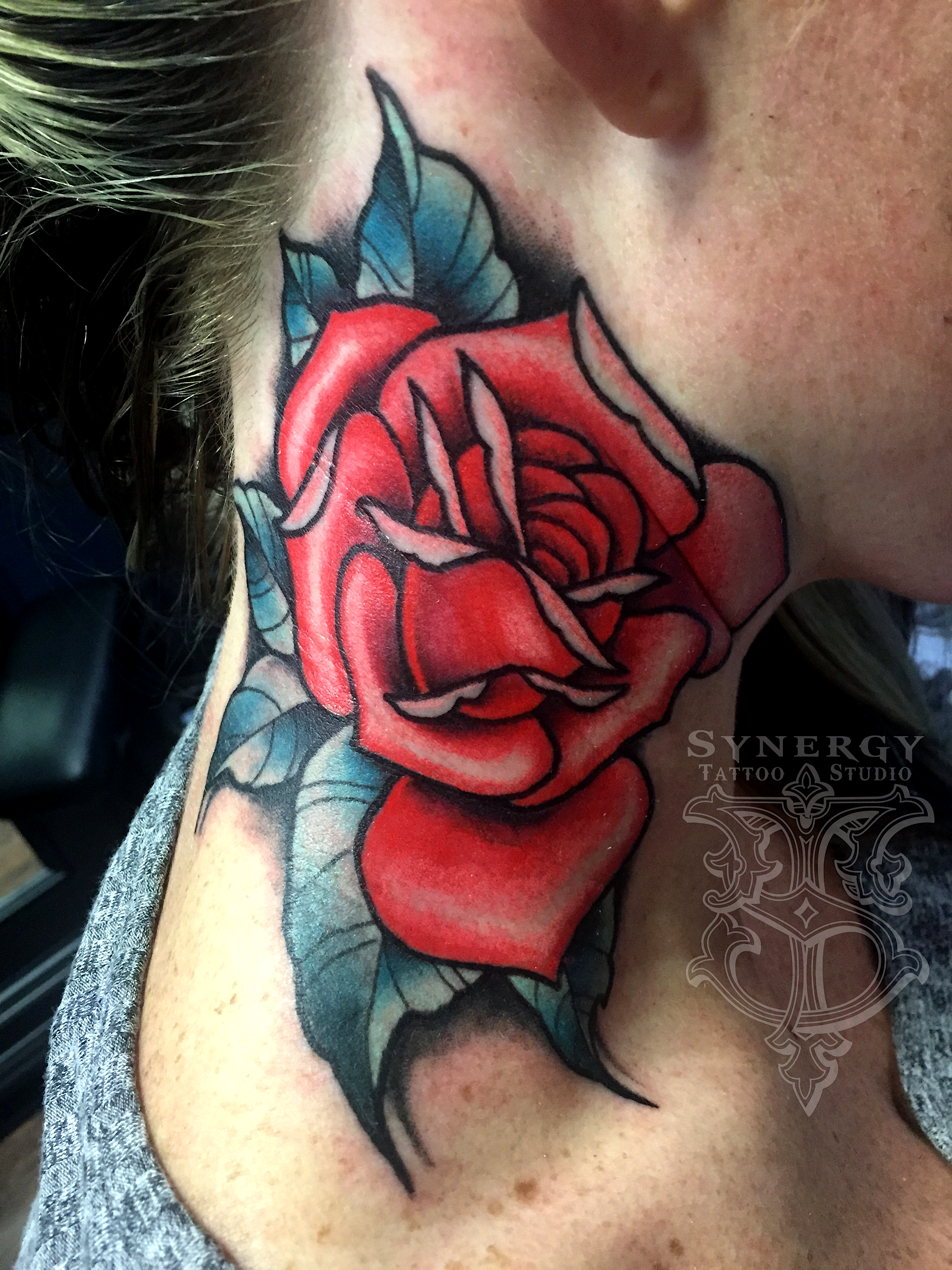
Rose tattoo by Frank Nardi · Synergy Tattoo Studio
Describe your idea without using another tattoo as the entire explanation. For example: “I want a botanical design that includes my grandmother’s favorite flower and follows the outside of my forearm.” That sentence identifies the subject, personal connection, and possible placement.
You do not need a complete drawing. Write down why you chose the subject and how you want the overall piece to feel. Quiet and simple, bold and graphic, or detailed and illustrative are useful starting points.
Choose references with a purpose
Gather three to six references rather than an entire camera roll. Give each one a job. One might show the kind of composition you like, another a flower’s shape, and another the balance of dark and open areas.
Label what you like about each reference. “The curved arrangement” communicates more than “something like this.” Also mention what you do not want, such as a background, lettering, or a particular color.
References can include photographs, artwork, and objects. Use other tattoos to communicate direction, not as instructions to copy someone else’s custom piece.
Bring placement and size ideas together
Think about the body area and the approximate space you want the design to occupy. A subject that feels balanced across a shoulder may need a different arrangement on a narrow forearm.
Measure a rough height and width in inches. Treat those numbers as a discussion point rather than a fixed requirement. If you are comfortable with two possible locations, note both. Include whether the tattoo should stand alone, sit beside existing work, or leave room for a future addition.
Separate essentials from flexible choices
Make two short lists. Under “essential,” include the elements that give the tattoo its meaning. Under “flexible,” include details you are happy to explore with an artist.
For a memorial design, the essential element might be a specific handwritten word. The framing, surrounding imagery, and orientation could remain flexible. This helps prevent every reference detail from becoming a requirement. It also gives you a way to evaluate suggestions: does the change preserve the part that matters most?
Write down the questions you want answered
Useful design questions include:
Which details need more room at this proposed size?
Could the composition work in either of my preferred placements?
What references would help clarify the subject?
How would adding a background change the overall design?
What should I confirm before taking the next step?
If you have a budget or a target date, include those in your notes. Ask how they affect the possible scope rather than assuming a particular size, schedule, or process.
Keep your preparation easy to review
Put your sentence, selected references, measurements, and questions in one place. Check spelling carefully if the idea includes names, dates, or lettering. Bring the original wording instead of relying on a cropped screenshot.
Bring your notes and reference images to Synergy Tattoo Studio in Vineland. Use the booking page to check available consultation times.
Plan the visit and the next step
The booking page offers a free 30-minute in-person consultation at 3 Lasalle Drive, Vineland, NJ 08360.
No artist selection is required when booking the consultation. Bring references and use the conversation to discuss your idea.
Synergy schedules the tattoo appointment separately after the consultation.